Rollerblades, assemble: step-by-step guide on how to adjust and assemble your inlines
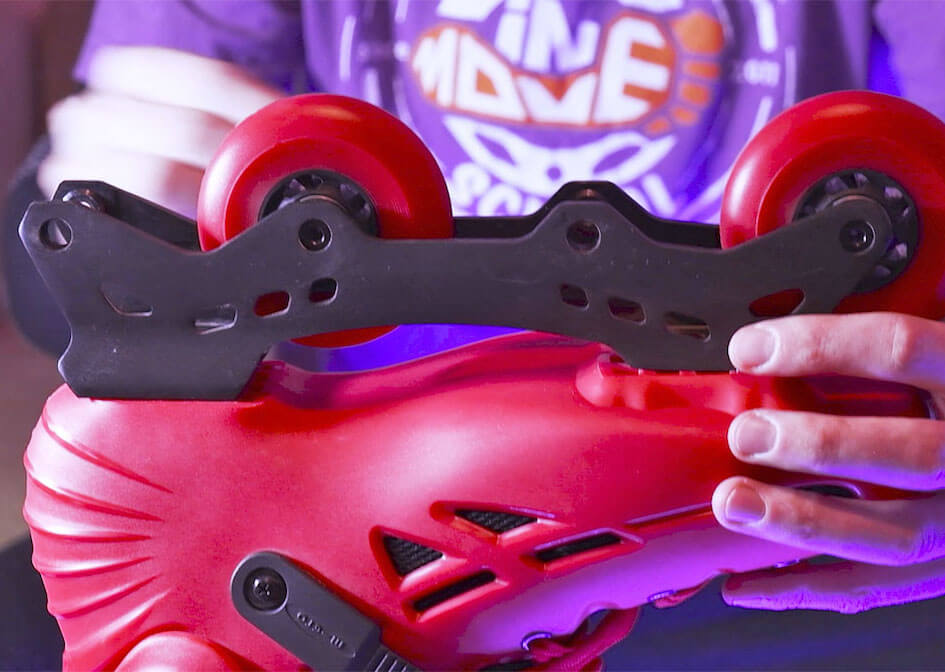
Some inline skates ordered directly from the manufacturer can arrive with minor assembly required. The process is usually simple and quick, and the necessary tools are often included in the box together with the manufacturer’s instructions.
Depending on the skate and mounting system, the frame may use two or four mounting bolts. Two-bolt mounting is especially common and can usually be installed with a 4 mm Allen key or, on some models, an M7 Torx tool. In some cases, you may also need to install the wheels and bearings.
Before you start: Use the correct tool for every axle and mounting bolt, work by hand rather than with power tools, and check the manufacturer’s instructions for your specific skate.
How to install a frame on inline skates
It is useful to have thread locker available during installation. Start by aligning the frame with the boot so that the mounting points line up correctly. Depending on the boot construction, a raised-heel skate may sit slightly higher at the rear than at the front.
Once the frame is aligned, apply thread locker to the mounting bolts according to the product instructions. Tighten each bolt enough to hold the frame securely while still allowing a small amount of side-to-side adjustment.
Start with the frame centered under the boot. From there, make small lateral adjustments only if needed. Two common reasons for changing the frame position are pronation and supination:
- Pronation: the ankles tend to roll inward. A small adjustment of the front of the frame toward the big-toe side can sometimes help improve alignment.
- Supination: the feet tend to roll outward. A small adjustment of the front of the frame toward the little-toe side can sometimes help.

How tight should skate wheels and frames be?
Once the frame position is correct, tighten the mounting bolts securely by hand. Avoid using power tools or applying excessive torque. Over-tightening can damage hardware and make future maintenance more difficult.
Important: Do not use power tools to tighten frame bolts or wheel axles. Hand-tightening with the correct tool gives you much better control and reduces the risk of damaging the hardware.
It is also a good habit to check all axles and screws before each skating session. Make sure everything is properly fastened before you ride.
If a bolt is difficult to loosen, first make sure the Allen or Torx tool is inserted fully and held straight in the bolt head. A larger-handled hand tool can provide more leverage. If needed, a small amount of penetrating lubricant can help loosen stubborn hardware; allow it time to work before trying again.
If a screw or axle head becomes damaged or stripped, avoid forcing it further. In severe cases, removal may require a specialized extraction method or replacement hardware.
How to assemble inline skates
Before assembling your skates, identify the correct tool for the hardware. Inline skate axles commonly use 6 mm or 8 mm hardware, although the exact tool depends on the model. The skate box will often include the tool required for basic assembly.
Using the wrong tool size can damage the bolt or axle head and make future maintenance much more difficult, so always check the fit before applying force.
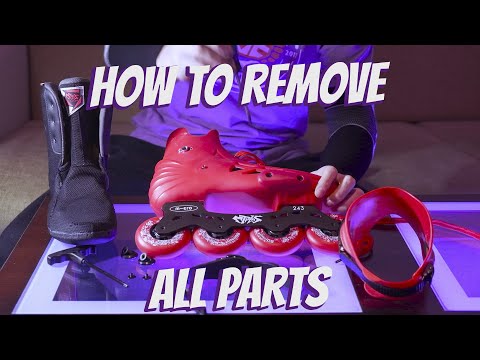
How to install bearings on inline skate wheels
- Remove the wheels. Use the correct axle tool and make sure it is fully seated so you do not damage the axle head.
- Remove the bearings. Use a bearing puller or the appropriate skate tool to carefully work the first bearing out of the wheel hub. Once the first bearing is removed, the second bearing is usually easier to push out from the opposite side.
- Install the first bearing. Place the bearing squarely into the wheel hub and press it in evenly on a flat surface.
- Insert the spacer. Make sure the spacer is centered between the two bearing seats.
- Install the second bearing. Press the second bearing into place until both bearings are seated evenly and the spacer remains centered.
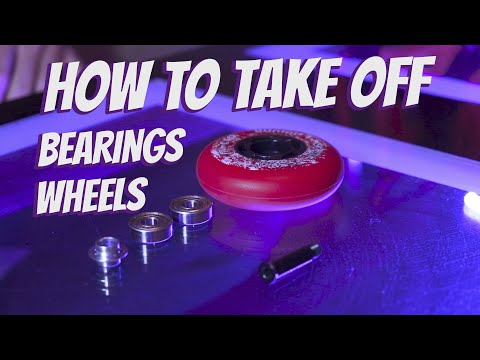
How to rotate wheels on inline skates
As you skate, the wheels will gradually wear more on one edge than the other. This is normal. Rotating the wheels regularly helps keep the wear more even and can extend the useful life of the wheel set.
How often you should rotate the wheels depends on how frequently and how aggressively you skate. For someone skating regularly, checking the wheels every few sessions is a good habit. Rotate them once the inside and outside edges begin to wear unevenly rather than waiting until the difference becomes extreme.
For a typical four-wheel setup, one common method is to swap the first and third wheels between the left and right skates, then swap the second and fourth wheels between the left and right skates. When reinstalling them, place the more worn edge toward the outside of the frame so the less worn edge becomes the new inside edge.
The inside edges usually wear faster because of carving, turning, slides, and common stopping techniques. Regular rotation helps maintain a more consistent feel from the wheels and reduces the need for early replacement.